LEGO Jurassic Park Visitor Center

LEGO Jurassic Park Visitor Center
Over the years, almost every new LEGO movie licensed theme has been created to match with a new theatrical release. In the case of big movie franchises, some sets based on previous films were produced before the ones based on the new films. This has happened with “STAR WARS”, “Toy Story”, or “Indiana Jones”.
So a good reason to release a fourth Jurassic Park movie was the chance to see LEGO products for the previous films, right?
Strangely, the last product license ignores the previous movies and is based only on the last film in the series, “Jurassic World”. It looks a lost opportunity for such a license deal.
The key elements in the Jurassic Park films are the dinosaurs, but the movies are also filled with lots of iconic vehicles, locations and characters with a lot of potential for a complete building toy line.
The biggest set in a utopian Jurassic Park Theme would be the Visitor Center.
This project features a complex building in the facade, as well as some rooms inside to recreate every scene in the movie. Check all features at: LEGO Jurassic Park, and you can turn this LEGO design into an actual product, by supporting the project. If it gets 10K votes, t will be evaluated by the LEGO group.
International Surfing Day

International Surfing Day
Yesterday, 66 surfers piled onto a 42-foot-long surfboard off the shores of Huntington Beach, California, affectionately nicknamed Surf City, to break the Guinness World Record for “Most People Riding a Surfboard at Once.
Happy Surfing Day to you all!
Art Basel fair 2015 features $3.4 billion worth of art

Art Basel 2015
Despite predictions that the art bubble is about to burst after Steve Cohen dropped a whopping $141 million in May to buy a Giacometti at Christie’s, sales are brisk at Art Basel, where an estimated $3.4 billion in art is up for grabs.
A Christopher Wool painting reportedly went for $5.5 million an half hour after the show’s VIP opening Yesterday, and a Keith Haring sold for the same price. Pace Gallery sold out a Robert Rauschenberg presentation.

christopher wool
Leonardo DiCaprio stalked the booths of Larry Gagosian, Matthew Marks and others while puffing an e-cigarette. He powwowed with Jeffrey Deitch as collectors Peter Brant and Dan Loeb also circled.
Petzel Gallery of New York reports selling a Thomas Eggerer painting for $100,000, a Wade Guyton U Sculpture for $490,000, a Sean Landers painting for $100,000, a Charline Von Heyl painting for $150,000, an Adam McEwen graphite sculpture for $100,000, and various Jorge Pardo glass lamp sets for between $85,000-100,000.
Galerie Lelong made three sales for over 1 million Euro each: two Konrad Klapheck paintings and one Sean Scully painting, all to private collectors; the gallery also sold the 2.5 meter sculpture by Jaume Plensa as well as several paintings by Günther Förg and Etel Adnan.
Andréhn-Schiptjenko of Sweden reports great feedback for their booth featuring José León Cerrillo and Gunnel Wåhlstrand. Both works by Wåhlstrand, a very sought-after Swedish painter with a very spare production, were sold within half an hour of the opening.
Hannah Hoffman Gallery sold a Sam Falls installation during the opening of Unlimited along with Galerie Eva Presenhuber and Galleria Franco Noero.
Sean Kelly has had strong sales across the board including a Joseph Kosuth for 300,000 Euro.
Jack Shainman of Jack Shainman Gallery reports strong interest in in the work of Carrie Mae Weems, selling five Kitchen Table works by Carrie Mae Weems to a major American institution. “I am so pleased at the level of interest in the work of Carrie Mae Weems, particularly the level of recognition from European institutions. Sales have been brisk in the opening hours of Art Basel including the placement of works in top collections,” said Jack Shainman on his solo presentation of Carrie Mae Weems in Feature (T6)
Mnuchin Gallery sold Thomas Schütte’s bronze, artist’s clothes, and cord on steel base sculpture “Vater Staat, dressed” 2010 for $1.6 million.
Maureen Paley sold a 1984 acrylic on canvas titled “Mondo Cane 2 (Nine Figures)” by General Idea to a European Museum for 225,000 Euro. “Basel provides a curatorial framework based on the collections and museums in the town and nearby Zurich that provide context and set the mood for the fair’s high quality,” said Maureen.
Fergus McCaffrey has sold 12 works so far, including a Sadamasa Motonaga Oil on Panel for $650,000, from their booth presentation of masterworks by Post-War Japanese artists juxtaposed with important works by Italian avant-garde form the same period.
SUSANNE VIELMETTER LOS ANGELES PROJECTS sold their installation by Andrea Bowers to a major private collection in Europe. Her figurative pencil drawings were placed with private collectors in London and New York.
Lehmann Maupin reports: Three “thread drawings” by Korean artist Do Ho Suh, recently produced at the Dieu Donne artist workspace in New York, have sold in the range of $50,000-$100,000; Two totem sculptures by French-Algerian artist Kader Attia have sold in the range of 40,000-50,000 Euro. Attia’s newest sculpture, made of wood, mirror polished stainless steel, and aluminum, has sold in the range of 80,000-120,000 Euro; A new Hernan Bas painting, titled “The Flamingo Kid” (2015) has sold in the range of $100,000-$150,000; Tony Oursler’s LED panel piece “TER3” (2015) has sold for around $100,000; Two paintings by Brazilian artists OSGEMEOS have sold, one in the range of $80,000-$120,000 and the second in the range of $100,000-$150,000; A “Be Brave” (2015) neon by British artist Tracey Emin has sold in the range of £40,000-£50,000. An edition of her bronze sculpture, “The Heart Has Its Reasons” (2014) has also sold in the range of £100,000-£125,000 and a watercolor, “Sex 19 25-11-07 Sydney” (2007) was also sold in the range of £10,000-£20,000; One of Angel Otero’s new paintings, with imagery inspired by Pablo Picasso’s work, Took the bed out, Flew Kites and Saw the seeds grow (2015) has sold in the range of $50,000-$100,000; Shirazeh Houshiary’s newest painting, “Gist”(2015), has sold in the range of £100,000-£150,000; Two painting by Mickalene Thomas, both from 2015, were snapped up by collectors at prices in the range of $75,000-$100,000; An edition of Juergen Teller’s portrait, Joan Didion, Celine Campaign Spring Summer 2015, New York 2014 (2015), has sold for a price around £30,000; and the gallery has reserves have also been placed on works by Kader Attia, Mary Corse, Alex Prager, Tim Rollins & K.O.S., and Do Ho Suh.
Marlene Dumas’ art works from the 1970s to present opens at Fondation Beyeler

The exhibition at the Fondation Beyeler is devoted to the extensive oeuvre of Marlene Dumas, with its focus on the human body. Offering a unique review of her work from the 1970s up to the present, it is to date the most comprehensive European retrospective of this eminent South African artist now based in Amsterdam. In addition to her iconic paintings and drawings, the show features a selection of experimental collages from her early work as well as some of her most recent paintings.
One of the things that distinguish the work of Marlene Dumas is her remarkable blend of immediacy and intimacy. She encounters human beings in her pictures without reservation, occasionally even in a provocative manner, sometimes with humor. She concedes autonomy to color but her eye and the image’s focus is always centered on the human figure. Her works impressively show what painting can still achieve in this day and age, undoubtedly making her one the most significant and interesting women artists of the present day.
Her individual as well her group portraits display a varied palette of shades and contrasts. Expressive colors alternate with almost transparent hues that appear to illuminate the canvas from within. At times her pictures render very fragile, seemingly lifeless beings but then again she does not shy from depicting mutilated bodies and strikingly expressive faces. Like no other, she shows how artistic beauty can also relate to scenes of dread and horror. In a row of new, hitherto unseen works she turns her attention more strongly to the relationship between figure and space.
For many of her paintings and watercolors, Dumas relies on a pictorial archive she began compiling back in her youth. She often refers to current political crises or pressing societal issues, but her archive also contains private family photographs, art historical references, as well as press photos. Based on photographs taken from newspapers and magazines she transforms the templates with her magic touch of the brush into stirring and gripping, often even sinister paintings on canvas – what the camera time freezes in photography, Dumas brings back to life in her paintings. Her pictures radiate a compelling and sensuous power which viewers find hard to evade.
The exhibition at the Fondation Beyeler was developed in close collaboration with Marlene Dumas. Following a rough chronological order it traces her development as an artist. However, the opening section of the show follows a different plot. The first room features a number of her key works such as The Painter (1994), The Sleep of Reason (2009) and The Artist and his Model (2013). In this way the artist herself guides the visitor through the show with its focus on her unbroken fascination for the human image in painting.
Mick Fanning crowned World Champion 2013, Kelly Slater Wins Billabong Pipe Masters and J.J Florence wins Triple Crown of Surfing
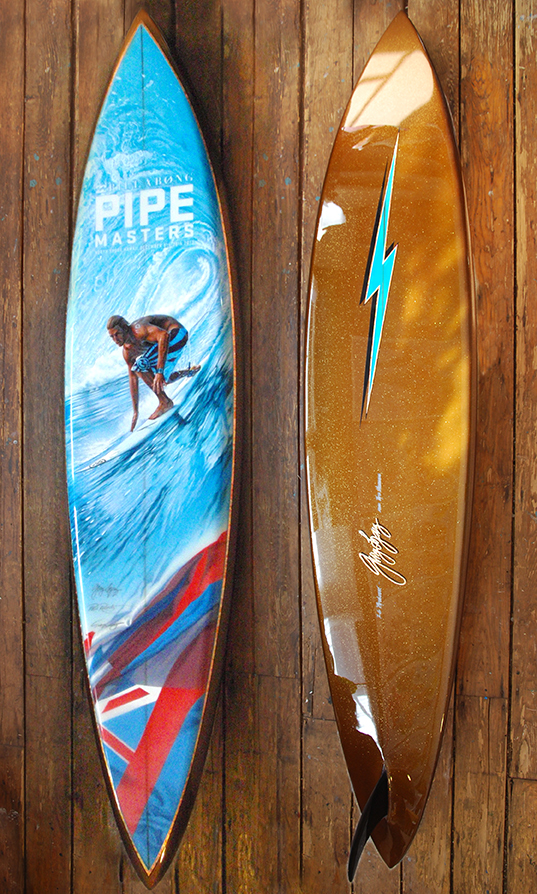 Kelly Slater edged out Florence to win the Pipe Masters title, but lost the overall Association of Surfing Professionals World Title to Australian Mick Fanning, who won his third world championship.
Hawaii surfer John John Florence won the Triple Crown of Surfing with a runner-up finish at the Billabong Pipe Masters in Memory of Andy Irons in what was described as “epic’ conditions at the Banzai Pipeline Saturday.
Two Damien Hirst art works were stolen from a Notting Hill Gallery in London
 Two Damien Hirst works of art worth £33,000 have been stolen from a west London gallery four days after being displayed.
The pieces were taken from the Exhibitionist Gallery in Notting Hill in the early hours of Monday.
The stolen works, called Pyronin Y and Oleoylsarcosine, feature multi-coloured dots.
Police believe the artworks were specifically targeted and want witnesses to come forward.
Anyone got a hint?
British Artists Selected to Design a Set of Posters for 2012 Olympics
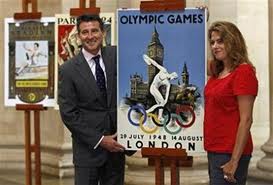 Twelve artists including Tracey Emin, Martin Creed and Chris Ofili will design a set of posters for the Olympic and Paralympic Games next summer, as Britain seeks to use the events to showcase its cultural heritage. The nominated artists were chosen from a list of some 100, but organizers would not disclose how they came to their final decision. Asked why Damien Hirst had not made the list, for example, Ruth Mackenzie, director of the Cultural Olympiad, replied: “I think the answer is, we’re not going to go there.”
Emin told reporters at an event at Tate Britain gallery, held exactly a year before the London 2012 Festival event gets underway, that she wanted her poster to be a celebration of life in the city.
“(I want to) show the world that London can really throw a party and that was what it was like with the royal wedding,” she said, referring to the recent marriage of Prince William and Kate Middleton that attracted a huge global television audience.
“In times of depression, what came across as really, really cool was the arts. Arts and culture is the soul of the country,” she added. “I’m interested in the party scene, the celebration.”
For Michael Craig-Martin, also selected, artists had the advantage over graphic designers when it came to making posters for an event like the Olympics.
“Artists always bring something different, because you are bringing a personal language to it.”
He said that while art was not competitive like sport, even when a major award like the Turner Prize was announced, he did suffer from envy of other artists’ works, including Martin Creed.
The full list of commissioned artists is:
Fiona Banner • Michael Craig-Martin • Martin Creed • Tracey Emin • Anthea Hamilton • Howard Hodgkin • Gary Hume • Sarah Morris • Chris Ofili • Bridget Riley • Bob and Roberta Smith • Rachel Whiteread
The London 2012 Festival, which is the culmination of the four-year Cultural Olympiad, will run for 12 weeks from June 21-September 9 and include events around the country. Dozens of projects have already been announced, ranging from the countrywide Big Dance and The Reading Challenge to a production of Hector Berlioz’s “The Trojans” and pop star Damon Albarn’s contemporary opera “Dr. Dee.”
Some of the events have been specifically commissioned for the Olympiad climax while others have been held to coincide with the festival.
Roy Lichtenstein’s “Drawing for a Kiss V.” drawing will be auctioned May 11, 2011
 The invitation to a 1960s “happening” was intriguing: Pay $10 to enter a lottery for the chance to get a key to a Penn Station locker containing artwork.
For one New Yorker who attended the 1965 event, the key revealed a Roy Lichtenstein drawing that Christie’s auction house estimates will fetch around $1 million at its May 11 auction.
“Kiss V” is a study for one of Lichtenstein’s major paintings of the same name, which is in a private collection and belongs to his dream-girl series created between 1961 and 1965. Measuring 6 inches by 6 inches, the study is a comic book-inspired close-up of a man and woman, executed in graphite and wax crayon.
The artist, who died in 1997, was famous for his cartoon-inspired style that helped launch — along with Andy Warhol, Jasper John and others — the pop art movement.
“Happenings,” spontaneous and fun arts and performance events, sprung up all around the city during the heady days of the 1960s.
The March 1965 one was organized by a group of emerging pop artists. It invited participants to come to the Hotel Chelsea — home to numerous legendary writers and artists — to enter into the $10 lottery for a key to about 20 lockers at the old Penn Station, which was then being torn down.
Thirteen artists participated in the Artists’ Key Club event. Besides Lichtenstein, they included Warhol, Christo and Arman.
“It was a large party for artists and people who were part of a hip downtown group having fun,” said Christie’s postwar and contemporary art expert Brett Gorvy. Later, he said, the group partied at a restaurant on the proceeds from the event.
Participants did not know which key opened which locker. And not everyone was as lucky as the woman who claimed the Lichtenstein drawing.
“One artist put up a group of very pungent cheeses” for his conceptual piece and another “had spices and herbs as his art work,” said Gorvy.
In 1965, the Lichtenstein drawing would probably have been valued at about $50. The current owner, who declined to be identified, decided to sell it because she had it recently appraised and was shocked to find out how much it was worth, Gorvy said.
Gorvy said Lichtenstein’s “Crying Girl,” a drawing of similar size and from the same series, sold at Christie’s in 2007 for $1.7 million. He said he expected “Kiss V” to surpass its pre-sale estimate of $800,000 to $1.2 million because of its unique provenance.
Lichtenstein was a “marvelous draftsman, who took the comic image and made it very much his own,” said Gorvy.
The auction record for Lichtenstein is $42.6 million for his “Oh … Alright,” a comic book image of a forlorn woman clutching a telephone. It sold at Christie’s in November.
Source: The Associated Press.
Richard Prince Exhibition at Gagosian Gallery in Paris
 Gagosian Gallery presents “Richard Prince: de Kooning” an exhibition of paintings and works on paper. This coincides with “Richard Prince: American Prayer” at the Bibliothèque nationale de France, an exhibition of American literature, ephemera and artworks from Prince’s personal collection.
Prince’s “de Kooning” series is a process of interaction with the canonic imagery of the Abstract Expressionist idol Willem de Kooning. The idea for these edgy Oedipal works came to him when he was leafing through a catalogue of de Kooning’s Women series. He started sketching over the paintings, sometimes drawing a man to de Kooning’s woman. As time went on, he began applying fragments of male and female torsos, genitalia, thighs, and facial features, cut and pasted from catalogues and vintage porn magazines, as well as drawing with graphite and oil crayon, adding outlines, silhouettes and textures to the original figures that further blur the distinction between de Kooning’s imagery and Prince’s own.
From these intensely worked drawings evolved a series of paintings that are, similarly, montages of elements from de Kooning’s original paintings with figures cut from printed matter. The results are blown up onto large canvases via ink-jet printer, then the original material all but painted over. From the resulting abstract grounds, Prince then conjures up crude figures that recall de Kooning’s savage female subjects. The resulting hermaphroditic creatures are hybrids on several levels, merging male with female, painting with photography and print, and the refinement of modernist art with the vulgarities of mass cultural representation. Both homage and desecration, the de Kooning paintings exemplify Prince’s vision of a “Spiritual America,” a historical consciousness fueled by a pervasive desire for rebellion and reinvention.
Mining images from mass media, advertising and entertainment since the late seventies, Prince has redefined the concepts of authorship, ownership, and aura. Applying his understanding of the complex transactions of representation to the making of art, he evolved a unique signature filled with echoes of other signatures yet that is unquestionably his own. An avid collector and perceptive chronicler of American subcultures and vernaculars and their role in the construction of American identity, he has probed the depths of racism, sexism, and psychosis in mainstream humor; and the mythical status of cowboys, bikers, customized cars, and celebrities. His most recent work is an explosive mix of pulp fiction, soft porn, and high art.
Richard Prince was born in 1949 in the Panama Canal Zone. His work has been the subject of major survey exhibitions, including the Whitney Museum of American Art, New York (1992); San Francisco Museum of Modern Art (1993); Museum Boijmans van Beuningen, Rotterdam(1993); Museum für Gegenwartskunst, Basel (2001, traveled to Kunsthalle Zurich and Kunstmuseum Wolfsburg); Serpentine Gallery, London (2008). The retrospective “Richard Prince: Spiritual America” opened at the Solomon R. Guggenheim Museum in 2007 and traveled to The Walker Art Center, Minneapolis in 2008. “Richard Prince: American Prayer”, an exhibition of American literature and ephemera from the artist’s collection, will be on view at the Bibliothèque nationale de France, Paris from March 29 – June 26, 2011.

 Raw art Weblog
- LEGO Jurassic Park Visitor Center
- International Surfing Day
- Art Basel fair 2015 features $3.4 billion worth of art
- Marlene Dumas’ art works from the 1970s to present opens at Fondation Beyeler
- Mick Fanning crowned World Champion 2013, Kelly Slater Wins Billabong Pipe Masters and J.J Florence wins Triple Crown of Surfing
- Two Damien Hirst art works were stolen from a Notting Hill Gallery in London
- British Artists Selected to Design a Set of Posters for 2012 Olympics
- Roy Lichtenstein’s “Drawing for a Kiss V.” drawing will be auctioned May 11, 2011
- Richard Prince Exhibition at Gagosian Gallery in Paris
- One line greeting art
- var sc_project=6733549; var sc_invisible=1; var sc_security="73c8e4b7";
 Raw art Weblog